
Market Signal
How Can Market Signal Protect Your Budget?
Market Signal is a 12-month metal price forecasting capability, originally developed through a government-funded critical minerals program. It helps you:
- Budget with more certainty
- Strengthen hedging strategies
- Improve purchasing decisions
- Reduce metal price risk

Is Metal Price Volatility Shredding Your Budget?
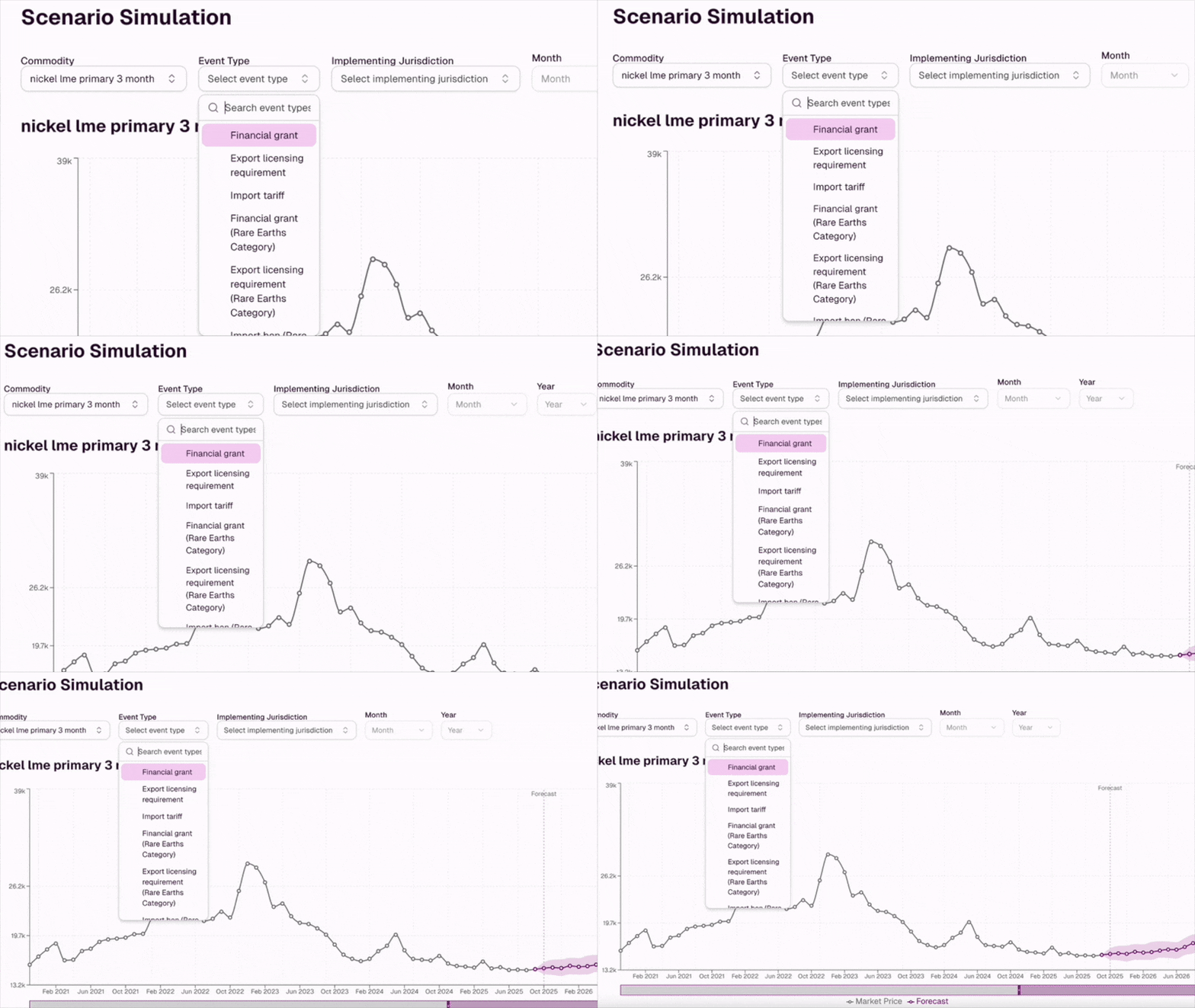
Metal cost swings can upend budgets and margins overnight. When metal prices suddenly spike or crash, products can become unprofitable. Meanwhile, margins get squeezed, requiring quick fixes before investors lose confidence. Market Signal removes this stress by providing 30-day, 3-month, and 12-month outlooks.
What Changes When Your Team Uses Market Signal?
With Market Signal, your team can plan for metal price swings before they hit, instead of reacting after the fact.
Instead, You’ll:
- Stay ahead of cost curves.
- Time contracts and capex confidently.
- Present reliable financial forecasts to boards and investors.
You No Longer Need to:
- React to price swings after they’ve already hit.
- Delay capex decisions due to material cost uncertainty.
- Hedge too late and sacrifice margin.
Why Do Spot Purchases Leave Companies Exposed?
Hedging is a key tool for managing price risk, but reacting too late is when you lose money. Many companies only hedge after costs spike, or not at all, which means the buying organization is actually speculating vs. managing the risk. Research shows that a well-planned hedging program can reduce earnings volatility by 20–25%, but only if you act at the right time.
12-Month Price Forecasts
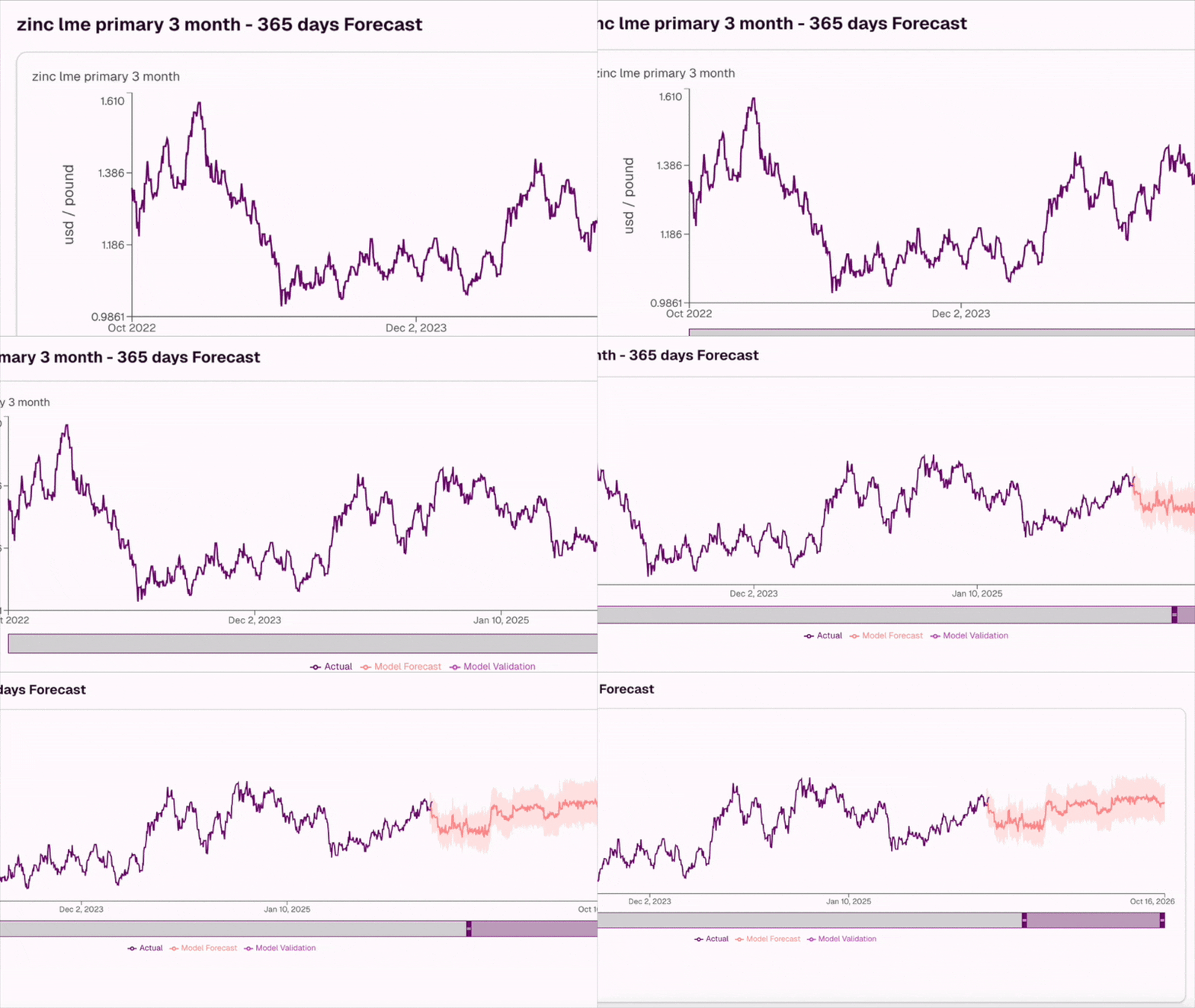
Market Signal predicts the prices of industrial metals like steel, aluminum, copper, nickel, and more.
Strategic Hedging Insights
With Market Signal, we flag forward price movements and allow you to visually see optimal windows to hedge before it’s too late.
Smarter Investment Timing
Gain the ability to map out capital expenditures, contract renewals, and M&A with forecasted cost increases
or drops.
Stronger Financial Credibility
You’ll have the data-backed visibility needed to confidently speak with your board, lenders and stakeholders.
How Does Raw Material Uncertainty Affect Company Growth?
When raw material prices are unpredictable, big spending freezes up. CFOs may delay capital projects, expansions, or M&A until they understand costs. Delaying growth or acting too late can waste resources and hurt ROI.
Problem:
Uncertainty in commodity costs stalls investments and hinders expansions.

Solution:
Market Signal provides clear, forward-looking price trends. With a reliable 12-month forecast, you can time major decisions to coincide with favorable cost windows.
How Has Market Signal Been Validated?
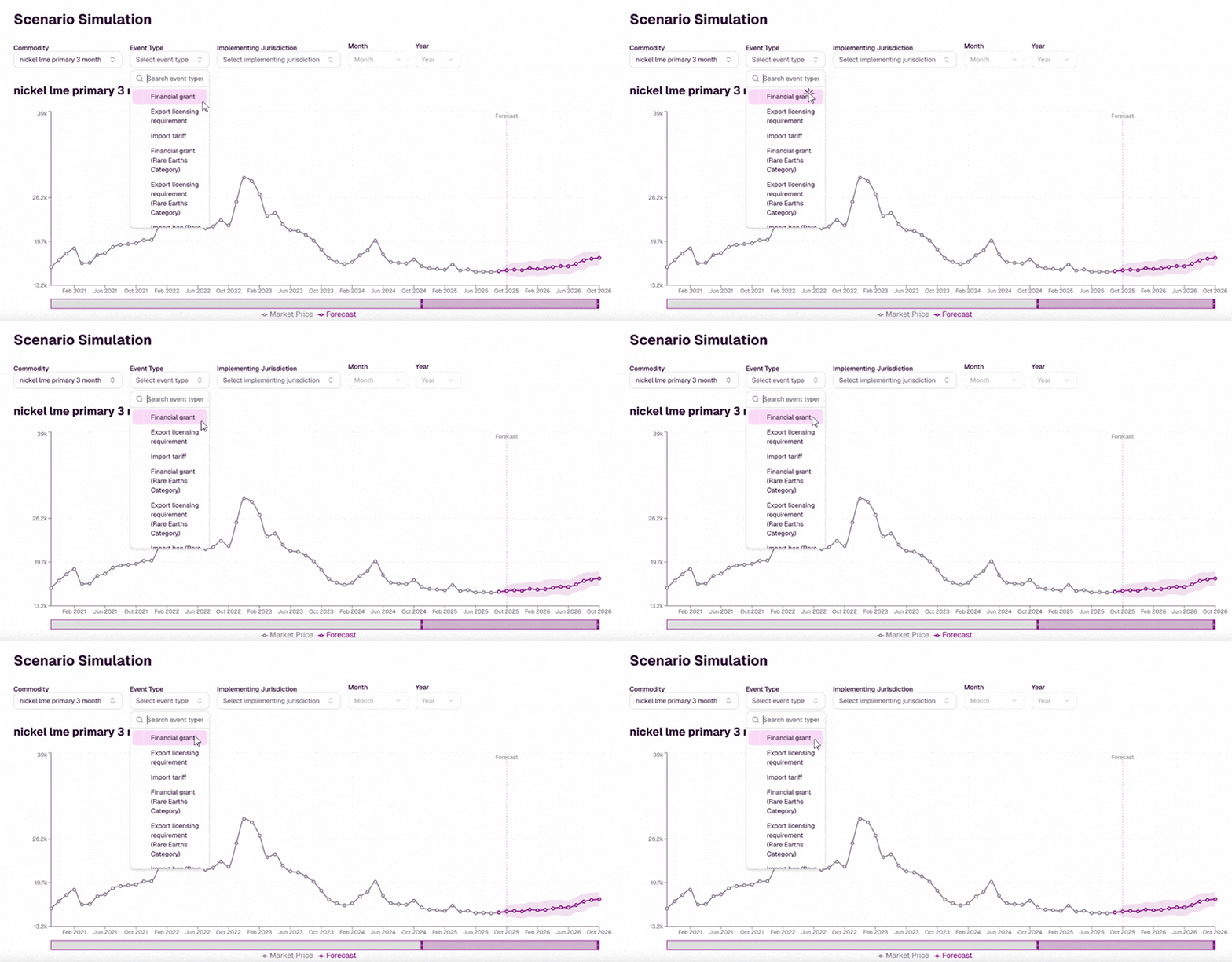
- Market Signal’s forecasts are retrained when they fall outside a 6% error rate.
- Every forecast is scored for accuracy.
- Built under a government-funded program focused on critical supply chain intelligence.
- Every risk flag is time-stamped, so past risk calls can be checked.
Ready to See Market Signal in Action?
Curious How Market Signal Will Work With Your Current Systems?
How Does Market Signal Warn You About Incoming Supply Risks?
Through the Signal Layer. The Signal Layer is a scoring mechanism within Market Signal that gauges the risk of every material MetalMiner covers for price and supply risks.
- Daily risk scores: Built from three-month and 12-month price trends, intermediate-grade moves, and volatility
- Early warning signals about building supply risks: For example, the Signal Layer flagged a tungsten spike about nine months early, before prices rose more than 700%, as MetalMiner reported in November 2026.
- Auditable calls: Every signal is time-stamped, so you can check what was flagged and when

How Does Signal Layer's Risk Index Work?
The Signal Layer gives each metal that MetalMiner covers a supply risk score. Each score uses four inputs: the three-month price trend, the 12-month price trend, how intermediate grades move, and volatility. When a score rises toward elevated risk zones, the Signal Layer flags it. All flags are time-stamped, so you can check when each one was raised.

How Can Companies Use Market Signal?
Companies in many industries use Market Signal in different ways.
Automotive Manufacturer (Hedging and Earnings)
An automotive manufacturer hedged aluminum and copper after prices spiked, so quarterly earnings swung with the market. Market Signal’s 12-month outlook gave the finance team time to set hedges before prices moved. MetalMiner’s partnership with N-Alpha combined Market Signal’s forecasts with N-Alpha’s business process automation and analytics to accomplish this.
Aerospace Supplier (Capital Allocation)
An aerospace supplier that sold directly to aircraft makers delayed a plant expansion because titanium and nickel costs were uncertain, which stalled its growth. Market Signal’s forecasts allowed its CFO to time the investment to favorable cost trends, so the project could meet its return targets.
Consumer Goods Producer (Margin Protection)
A consumer goods producer saw aluminum packaging costs squeeze its margins when prices rallied, and its suppliers demanded contract premiums. Market Signal’s forecasts helped its CFO anticipate price dips and lock in contracts at lower prices.
What Can Companies Do With Market Signal?
Market Signal gives metal sourcing organizations a forward-looking view of metal price directions so they can hedge. This means that companies can plan working capital and avoid over-financing inventory. Its forecasts cover 183 market tracks. Every forecast is time-stamped and later checked against the price that actually followed.
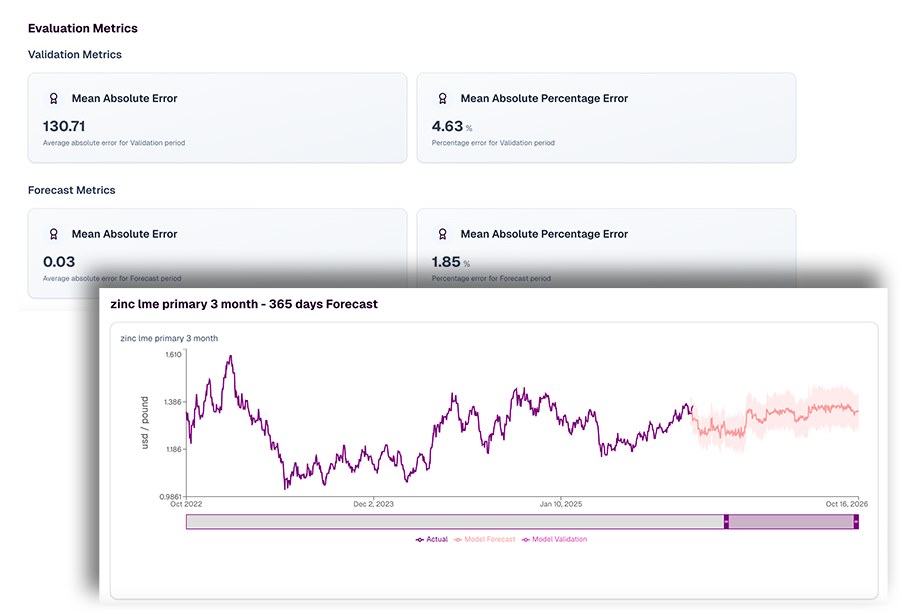
- Market Signal’s 12-month forecasts almost always stay within a maximum 6% error range.
Finance teams use this visibility to stabilize quarterly earnings. - By knowing about potential price swings in advance, companies move from reactive to proactive hedging.
- When uncertainty is tamed, working capital flows more easily. Projecting volatility means companies no longer have to over-finance inventory.
Built on 183 forecastable market tracks, Market Signal builds forecasts on a transparent, auditable foundation. This rigor, borne from a defense-level research effort, gives companies confidence that their metal sourcing strategies rest on secure, high-quality information.
What Does Market Signal Integrate With?
Market Signal fits into the systems finance teams already use:
Market Signal offers API-ready data feeds that can plug forecasts directly into platforms like SAP, Oracle, Anaplan or Workday Adaptive.
Market Signal’s data exports easily into Excel, Power BI, Tableau and many other analytics tools.
Market Signal complements procurement suites (like Coupa or Jaggaer) by adding the missing forward-looking layer. It works alongside your purchase order and contract systems.
Implementation is modular. Typically, you just grant API access or data feed credentials and we handle the rest. There’s no lengthy installation or workflow overhaul.