
What Reliable Metal Procurement Strategies Actually Work?

Most metal budgets fail before the year even starts. So what reliable metal procurement strategies actually work?
Many budget plans fail not because teams lack the correct data. Not because finance gets it wrong.
They fail because they assume that all metals move in sync and risk can be averaged. That assumption doesn’t hold.
Over the last three years, MetalMiner data shows major divergence across key industrial metals:
- Copper COMEX: +40.6%
- Aluminum LME 3-month: +46.3%
- Nickel LME 3-month: -24.6%
- Midwest Premium: +354.4%

These are not minor differences. They reflect completely different pricing behaviors across steel, aluminum, copper, nickel, and other industrial metals.
Why Do Most Metal Budgets Break Down?
Because they rely on outdated assumptions about how metals behave.
The three biggest issues:
1) Treating all metals the same
- Steel prices respond to domestic supply, mill lead times, and trade policy.
- Copper prices respond to global macroeconomic demand and exchange-traded activity.
- Many metal prices (like aluminum, for example) include multiple benchmarks, such as LME, Midwest Premium, etc.
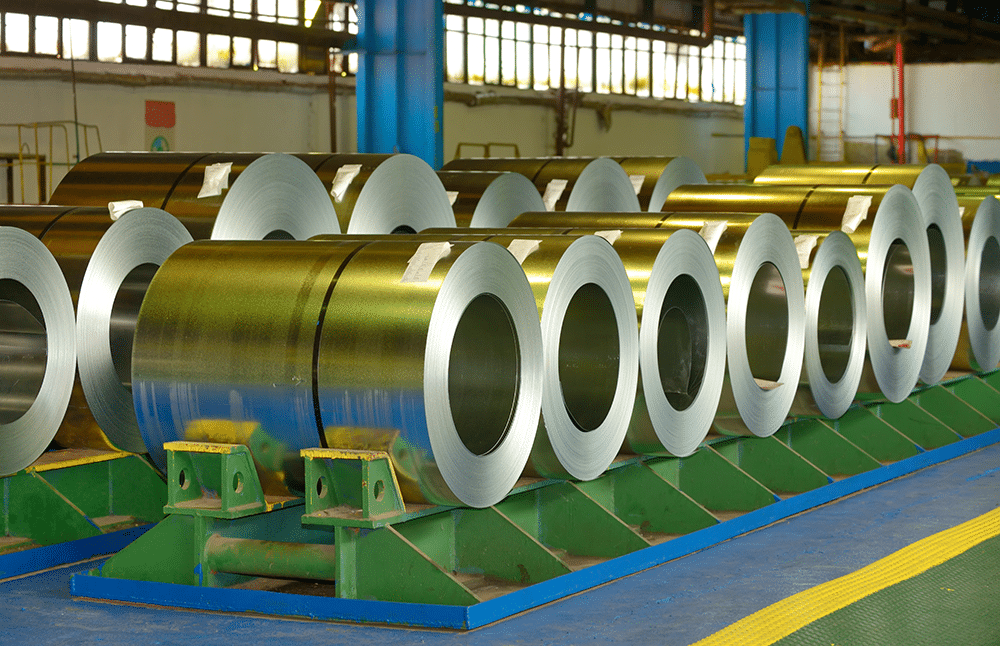
These are not interchangeable dynamics.
A single “metals inflation” line hides risk instead of explaining it.
The result:
- Budget variance surprises
- Weak forecasting credibility with finance
- Reactive instead of proactive buying decisions
How Should Your Procurement Team Actually Budget?
Budget the price you actually pay, not the benchmark headline.
Every metal purchase includes multiple cost components:
- Exchange benchmark (LME, COMEX)
- Regional premium (Midwest Premium, etc.)
- Conversion costs
- Alloy extras
- Freight
- Supplier-specific charges
This is where tools like MetalMiner’s Sage become critical, because they map real purchasing structures to market drivers rather than relying on simplified ERP labels.
Why Aluminum Makes Budget Errors Obvious
Aluminum is not a single price. It is a layered structure.
As of April 2026:
- LME 3-month: ~$3,425/mt (~$1.5536/lb)
- Midwest Premium: ~$1.11/lb

If your budget only includes the LME price, it ignores a significant share of your actual cost exposure.
Why the Midwest Premium Needs Its Own Budget Line
Too many organizations treat the Midwest Premium as a small add-on. However, it isn’t.
Over the last three years:
- Low: $0.1886/lb
- High: $1.11/lb

That range alone can materially change your total cost position.
How Do You Build a Metal Budget That Holds Up?
Step 1: Build a Benchmark Table First
Before creating a budget, align procurement, finance, and operations around one shared dataset.
Include:
- Benchmark name (Copper COMEX, Aluminum LME, HRC, etc.)
- Unit of measure
- Latest price
- 3-year range
- % change
- How it appears in supplier pricing
Why this matters:
- Everyone works from the same assumptions
- Differences between metals become visible immediately
- Risk is easier to quantify and communicate
Step 2: Build the Budget in Layers, Not Averages
Use a structured formula:
Budgeted Metal Cost = Volume × (Benchmark + Premium + Conversion + Freight + Other Adders)
This approach:
- Separates market exposure from operational costs
- Makes supplier add-ons easier to challenge
- Improves clarity in budget variance analysis

Example: Copper
Copper pricing typically starts with COMEX, then adds fabrication and delivery costs.
Over three years:
- Range: $3.5520 → $6.2335/lb
- Latest: $5.6105/lb
That range shows why a single average does not work.
Step 3: Replace Single Estimates With Confidence Ranges
Budgets fail when they rely on one number.
Instead, use structured ranges informed by an automated category manager like Sage to improve market clarity and lessen costly mistakes.
Build:
- Low case
- Base case
- High case
Why this works:
- Procurement understands when to accelerate or delay purchases
- Finance understands earnings exposure and working capital risk
- Leadership sees a realistic range of outcomes
Example: Nickel
- Range: $14,030 → $25,775/mt
- Latest: $17,060/mt
A single estimate ignores real volatility.
How Do You Translate Metal Price Risk Into Financial Impact?
Finance teams do not need more commodity terminology. They need clear dollar exposure.
Use this formula:
Budget Impact = Purchase Volume × Change in Benchmark Price

Example:
- 10 million pounds of copper
→ $0.10/lb move = $1 million impact - 50,000 short tons of hot-rolled coil
→ $100/ton move = $5 million impact
This creates a direct connection between metal prices and financial performance.
Why Steel Requires Its Own Budget Strategy
Steel behaves differently from nonferrous metals such as copper and aluminum.
- It is not driven primarily by exchange pricing
- It reacts to domestic supply-demand shifts
- It is highly influenced by trade policy and imports
Over three years:
- Range: $655 → $1,167/short ton
- Latest: $1,012/short ton
Why One Metals Contingency No Longer Works
When looking closely at correlation data, the issue is clear:
- Copper vs Aluminum: strong (~0.90)
- Steel vs Copper: weak (~0.13)
- Steel vs Aluminum: weak (~0.09)
- Nickel vs Copper: negative (~-0.42)

What this means:
- Some metals can be reviewed together
- Others require separate risk frameworks
A single contingency rate hides real exposure.
Better budgets:
- Set separate ranges per metal
- Update at different intervals
- Reflect actual market behavior
How Should You Manage the Budget Throughout the Year?
A range only works if you act on it.
Define governance upfront:
- Who owns benchmark updates
- Who updates volume assumptions
- Who adjusts forecast ranges
- What triggers a budget review

Best practice workflow:
- Benchmark moves outside the defined range
- Procurement and finance review exposure
- Update cost bridge
- Decide whether to:
- Absorb
- Reforecast
- Renegotiate
- Adjust buying timing
What Does a Strong Metal Budget Actually Do? And What Reliable Metal Procurement Strategies Actually Work?
A strong budget does not eliminate uncertainty. It explains it clearly.
It shows:
- Where risk exists
- How large that risk is
- When action is required
You do not need a perfect forecast to build a better budget.
You need:
- A benchmark structure that reflects how you actually buy
- Layered cost visibility
- Confidence ranges powered by Market Signal
- A process that responds to real market movement
That is what separates a budget that gets explained from one that actually works.