
Why Generic AI Models Need Specialized Metal Pricing Data

Industrial organizations do not buy “metal” or “metals market intelligence”. They buy a specific benchmark, product form, unit, regional basis, currency, and date.
That distinction is where generic AI models begin to struggle.
A large language model can produce a polished answer to a pricing question while omitting the commercial details that determine whether the answer is usable. Without access to current, structured, metals-specific data, the model has to infer what the user intended.
Why Does AI Confuse Different Types of Metal Prices and Metals Market Intelligence?
The question “What is aluminum?” could refer to LME three-month aluminum, a North American delivered price, a regional premium, or an all-in cost built from multiple price series.
“What is steel?” could mean:
- Hot-rolled coil
- Cold-rolled coil
- Hot-dipped galvanized steel
- Steel plate
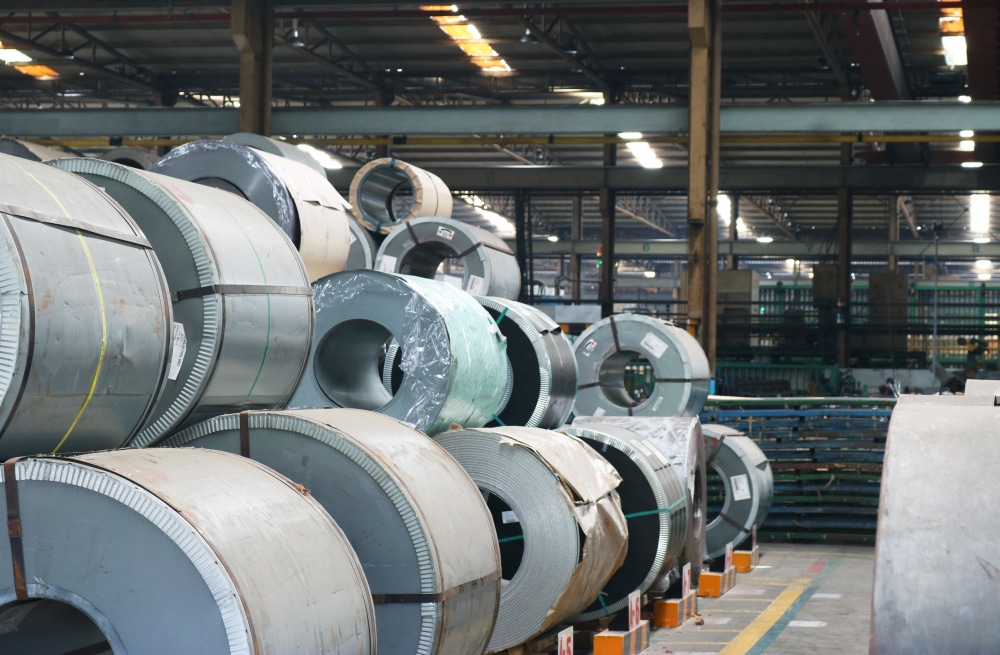
Or another product tied to a specific downstream specification.
The model may recognize the commodity while missing the commercial reference.
That is the difference between sounding knowledgeable and providing an accurate pricing answer.
Before looking at specific markets, it helps to understand where generic AI models typically fail.
The Four Most Common Metal Pricing Errors
Generic AI models often make one or more of these mistakes:
- Using the wrong benchmark
- Using the wrong product
- Using the wrong geography or regional basis
- Using the wrong unit or pricing convention
Why Is Aluminum Priced More Than Once?
Aluminum illustrates why a single benchmark rarely tells the whole story.
Current Aluminum Market Snapshot
On the latest available date in MetalMiner’s historical data:
- LME three-month aluminum: $3,167.50/metric ton
- Equivalent: approximately $1.437/lb
- U.S. Midwest Premium futures: $1.075/lb

For companies, that premium is not a rounding error. It equals roughly 75% of the exchange base value in pound terms.
An AI model that reports only the LME price understates the commercial reality of the purchase.
Why Generic AI Gets Aluminum Wrong
Many language models understand that aluminum pricing begins with the LME. However, that is only part of the answer.
A industrial metal purchase often depends on multiple pricing components rather than a single exchange value. When a model retrieves only the exchange benchmark, it removes a significant portion of the buyer’s actual exposure.
Knowing the benchmark is not enough. The model also needs the correct regional basis.
What the Historical Data Shows
MetalMiner’s historical pricing illustrates why both series matter.
Over the last two years:
- LME aluminum increased 28.3%
- The U.S. Midwest premium increased 441.6%
- The premium rose from $0.1985/lb to $1.075/lb
- The two series remained highly correlated on a monthly basis

Correlation, however, did not translate into identical price movement.
One series reflected the global exchange price. The other captured a regional cost component that expanded far more rapidly.
Organizations relying on historical pricing, forecasting, or machine-readable market data need both values to understand total exposure.
Key Takeaways
- LME aluminum is not the full price of aluminum
- Regional premiums can materially change commercial costs
- High correlation does not mean two pricing series behave the same way
- AI models should retrieve both benchmarks rather than infer a single answer
Why Can’t AI Treat Flat-Rolled Coil as “One Market”?
Steel highlights a different challenge. The product itself changes the answer.
Current Steel Market Snapshot
On the latest available dates in MetalMiner’s historical series:
- Hot-rolled coil: $1,135/st
- Cold-rolled coil: $1,342/st
- Hot-dipped galvanized steel: $1,418/st

Relative to hot-rolled coil:
- Cold-rolled carried a $207/st premium
- Hot-dipped galvanized steel carried a $283/st premium
If a model substitutes hot-rolled pricing for hot-dipped galvanized steel exposure, the result may appear reasonable while describing the wrong market.
Product Trends Matter More Than Price Direction
Generic AI models often recognize that flat-rolled steel products move together. However, that observation is incomplete.
Companies rarely purchase “steel.” They purchase a specific product with its own pricing behavior. Even when markets move in the same direction, the spread between products represents a separate source of commercial risk.
A model that retrieves only a generic steel benchmark can miss that spread entirely.
What the Historical Data Shows
MetalMiner’s historical data demonstrates why product-level pricing matters.
Over the last two years:
- Hot-rolled increased 70.9%
- Cold-rolled increased 38.8%
- Hot-dipped galvanized steel increased 31.3%
Monthly correlations remained extremely strong:
- HRC vs. CRC: 0.9767
- HRC vs. HDG: 0.9132

Yet the products were far from interchangeable.
MetalMiner’s normalized comparison showed hot-rolled coil outperforming:
- Cold-rolled coil by 31.46%
- Hot-dipped galvanized steel by 40.13%
A model can correctly identify market direction while still missing the commercial spread that affects purchasing decisions.
Key Takeaways:
- Hot-rolled, cold-rolled, and galvanized are separate commercial benchmarks
- Strong correlation does not eliminate product-level pricing differences
- Product spreads create meaningful commercial exposure
- AI should retrieve the requested product rather than substitute the nearest steel benchmark
How Can AI Cite the Wrong Copper Benchmark?
Copper presents a subtler challenge than aluminum or steel.
In North America, many organizations reference COMEX. Global comparisons often default to the LME. Both benchmarks describe the same base metal, and they frequently move together, but they are not interchangeable.
Current Copper Market Snapshot
On the latest available dates in MetalMiner’s historical series:
- LME three-month copper: $13,592/metric ton
- Equivalent: approximately $6.165/lb
- COMEX three-month copper: $6.378/lb

Why Generic AI Gets Copper Wrong
Because the two benchmarks track closely, a generic model may treat them as interchangeable.
That assumption can create problems.
Contracts, pricing formulas, hedges, and internal reporting frequently reference a specific exchange and contract family.
A model that substitutes one benchmark for another may identify the correct commodity while retrieving the wrong commercial reference.
What the Historical Data Shows
Over the last two years:
- LME copper increased 38.2%
- COMEX copper increased 38.9%
- Monthly correlation: 0.9474
- Relative performance gap: 2.39%
The two benchmarks moved similarly. However, that does not make them interchangeable.
For organizations relying on structured market data, the benchmark itself is part of the answer.
Key Takeaways
- COMEX and LME represent different benchmark families
- Strong historical correlation does not justify substitution
- Pricing formulas and contracts often depend on a specific benchmark
- AI should retrieve the requested benchmark rather than assume either will work
Why Isn’t Nickel a Substitute for Stainless Steel Pricing?
One of the most persistent AI shortcuts is ingredient logic.
Because stainless steel contains nickel, a model may answer a stainless pricing question with a nickel price.

Those are different commercial markets.
Current Nickel Market Snapshot
In MetalMiner’s current series:
- LME three-month nickel: $16,775/metric ton
- Equivalent: approximately $7.609/lb
- U.S. 304 stainless sheet: $1.9951/lb

Why Ingredient Logic Breaks Down
Nickel influences stainless pricing. It does not define it.
Treating nickel as a proxy assumes the relationship is much stronger than the historical data supports.
A model may understand the material relationship while still answering with the wrong commercial object.
What the Historical Data Shows
Over the last three years:
- Nickel declined 20.2%
- U.S. 304 stainless sheet increased 15.1%
- Monthly correlation: 0.3324
- Regression explained only 11.05% of the observed monthly variation
Nickel alone explained very little of this stainless price series.
The relationship existed, but it was weak.
Key Takeaways
- Nickel prices are not stainless steel prices
- Ingredient relationships should not replace benchmark retrieval
- Weak historical correlation reinforces that stainless represents its own commercial exposure
- AI should retrieve stainless pricing directly rather than infer it from nickel
What Causes AI Hallucinations in Metal Pricing?
In industrial metals, hallucination does not always mean inventing a price.
It often means returning a valid price for the wrong commercial reference because the model had to guess a missing field.
The most common failure modes include:

Each example changes the commercial meaning of the answer.
Markets move faster than model training cycles. Premiums, product forms, delivery basis, and units all influence the actual transaction.
Without current, structured market data, a model is not performing metal price analysis. It is filling in missing information from memory.
What Does Better AI Access Look Like?
The solution is not asking a general-purpose model to be more careful.
The solution is retrieval before response.
In MetalMiner’s environment, Sage serves as the AI working layer while MetalMiner’s MCP options provide access to structured external price series. Through that connection, the model retrieves the exact metal, benchmark, product form, geography, unit, currency, and date from IndX historical pricing.

A larger generic model can still return the wrong benchmark, the wrong steel product, or an aluminum price that omits the U.S. Midwest Premium.
A connected model behaves differently.
Rather than guessing, it first identifies the missing field.
- Which aluminum benchmark?
- Which steel product?
- Which copper exchange?
- Which geography?
- Which unit?
That retrieval-first approach produces answers that align with how industrial metals are actually bought, sold, and analyzed.