
Are You Using the Right Tools to Make Metal Buying Decisions?

The use of AI for metal purchasing companies has value. Black-box answers do not. With that said, what services does MetalMiner offer based on AI usage?
First, one must understand that skepticism toward AI is not the issue. Skepticism toward unexplained answers is. That distinction matters in metals procurement.
Finance leaders and procurement leaders do not need polished predictions without metal market context. They need to understand which metal market is being modeled, what is driving that price movement, and whether the market signal is strong enough to act upon.
Without that, even a sophisticated forecast can prove commercially useless.
What Makes a Metal Price Forecast Actually Useful?
A useful forecast starts with clarity, not complexity, as covered in 5 Best Metal Sourcing Practices. Buyers need to know what market signals they are looking at and how it connects to what they actually pay.

Structure and steps matter because:
- Data science works best when built on the correct price series
- Analysts ensure the model reflects real purchasing risk exposure
- Forecasts stay grounded in commercial reality, based on the drivers that are actually shifting prices
This is where tools like MetalMiner’s Sage become useful. Sage helps buyers organize and interrogate market signals so they can quickly determine whether a forecast aligns with actual spend.
Why Should Buyers Avoid Treating Metals as One Market?
Because each metal type’s prices behave differently. These differences directly impact the sourcing strategy used.
For instance, over the last two years:
- U.S. hot-rolled coil rose 24.3%
- COMEX copper gained 36.1%
- LME aluminum rose 36.5%
- U.S. 304 stainless sheet increased 16.0%
- Lithium carbonate rose 22.6%
- LME nickel fell 3.4%

These are not minor variations. They reflect fundamentally different risk profiles.
Why Is Aluminum a Two-Part Pricing Story?
Because the exchange price is only part of what buyers actually pay.
Over a two-year timespan:
- LME aluminum rose 36.5%
- U.S. Midwest Premium rose 406.1%

This demonstrates how, even when focusing on only one metal type, honing in on a single number alone can distort reality. Delivered cost exposure sits across both components.
Even with a strong correlation of 0.864 between the two, the commercial meaning still requires interpretation. What portion sits in the base price? What portion sits in premium?
How Do Technical Levels Influence Buying Decisions?
They provide timing context, not trading signals.
As of mid-April 2026:
- U.S. hot-rolled coil: near $1,042 with resistance at $1,060
- COMEX copper: $6.144, approaching long-term resistance near $6.31
- LME aluminum: $3,632, nearly at long-term resistance
- LME nickel: $18,560, close to short-term resistance
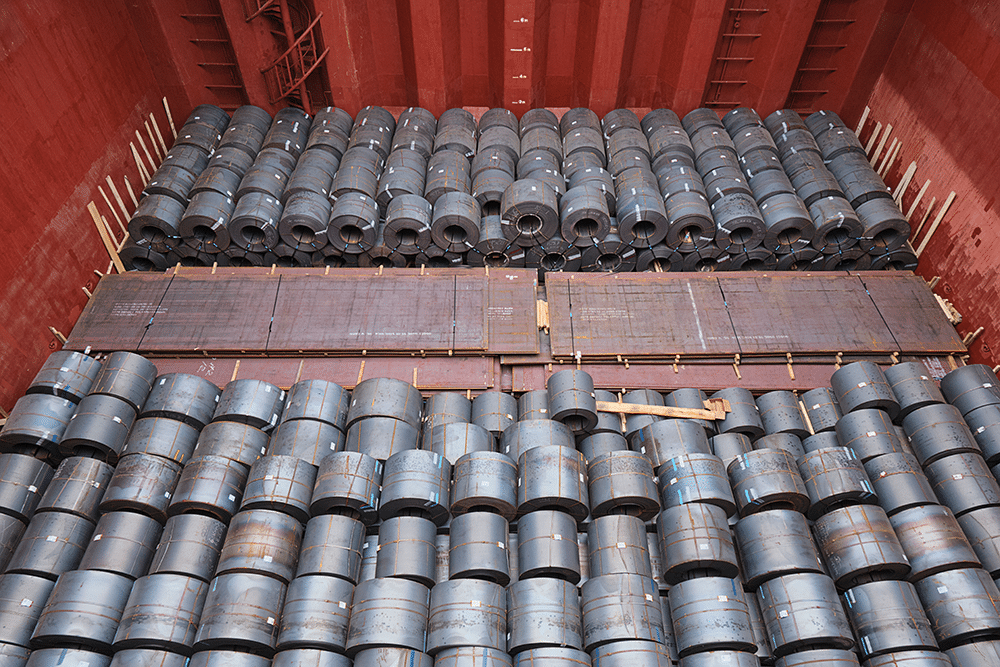
These levels help answer practical questions:
- Is the market stretched?
- Is it approaching a ceiling?
- Does this require budget attention now?
Why Doesn’t Stainless Follow Nickel in a Straight Line?
Because pass-through is inconsistent and influenced by multiple factors.
Over the last two years:
- Correlation between nickel and U.S. 304 stainless sheet: 0.240
- Nickel underperformed stainless by 26.85%

This challenges the assumption of a direct relationship. Stainless pricing does not move one-for-one with nickel, and timing differences matter.
This is exactly where black-box models can mislead. They assume clean relationships that do not exist.
Why Do Critical Minerals Require the Same Discipline?
Because volatility is higher, not simpler.
Lithium carbonate rose 22.6% over two years, but that endpoint hides a wide range:
- Low near 6.77
- Ending around 17.255
That spread shows how misleading a single number is.

The same disciplined approach used in steel and aluminum applies here:
- Define the correct market
- Understand the range
- Evaluate exposure carefully
With broader coverage across lithium, cobalt, graphite, tungsten, gallium, germanium, and rare earths, Sage helps buyers navigate these complex markets with greater clarity.
What This Means for Your Sourcing Strategy
Forecasts are only valuable if they support decisions.
Buyers should focus on:
- Matching forecasts to actual purchase exposure
- Separating exchange prices from regional premiums
- Using technical levels to guide timing, not predict certainty
- Challenging assumptions about metal relationships
The goal is not perfect prediction. The goal is better decisions supported by clearer information.
Why This Matters
AI can process more data than any team. But it cannot replace the type of accountability that executive teams expect from procurement managers.
The most valuable forecasting approach:
- Defines the market clearly
- Uses the right data
- Explains the result in practical terms
That is the standard procurement leaders should expect.
In metals, the most valuable AI is not the model that sounds the most certain. It is the one that provides a clearer basis for judgment.